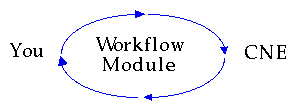
There is a connection between operating systems and workflow systems that has profound implications for the design and performance evaluation of computer systems. For over four decades the basic set of abstractions around which we structure operating systems has not changed. This is a testimony to the power and ruggedness of those abstractions, which have survived increases of processor speed and memory capacity exceeding six orders of magnitude, as well as an onslaught of parallel, distributed, and networked systems. This is about to change.
There is a new type of Workflow system that is based on a different conception of work than used by operating systems. This new conception of work is concerned with the fulfillment of commitments made between people, whereas operating systems treat work as the execution of computational tasks.
Dr. Peter Denning, Chairman of Computer Science at George Mason University has some new interpretations concerning the future integration of workflow and operating systems in his article "The Fifteenth Level". Since operating systems are the platform on which workflow systems rest, they will soon be adapting to this new conception. Vaskevitch (1994) also has some useful interpretations concerning the evolution of the client/server technology towards workflow. This will compel the addition of a new abstraction, the workflow process, to the hierarchy of existing abstractions. It will also generate new meanings of performance evaluation and capacity planning.

MRH
12/1/94